



WHY NIGERIA CUSTOMS MUST TRUST ITS NEXT GENERATION – SEREC
The Sea Empowerment and Research Center- SEREC has maintained a specific viewpoint, asserting that the 2007–2009 Recruitment Generation of the Nigeria Customs Service are professionally equipped and mentally ready to take over the mantle of leadership
In a press release signed by the Director General, Sea Empowerment and Research Centre (SEREC), Francis Aniezechukwu, the group stated maintained that the next generation of the Nigeria Customs Service is professionally and mentally equipped to take over the organization’s mantle of leadership, insisting that the young officers do not lack the experience required to occupy senior management positions.

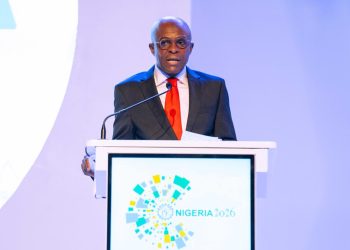
The Comptroller General of Customs, Bashir Adewale Adeniyi -PhD, MFR.
According to SEREC, “while we recognise the importance of institutional continuity, we reject the assumption that the next generation is unprepared to lead.”
“Our central argument is straightforward: the achievements of the Nigeria Customs Service are not produced by senior management alone. They are the cumulative results of the operational work, professional competence, intelligence, enforcement activities and administrative contributions of officers throughout the Service.”
“When Customs records billions of naira in seizures, recovers revenue, intercepts prohibited goods, improves compliance or facilitates international trade, those outcomes depend on officers who assess declarations, examine cargo, gather intelligence, conduct enforcement operations, process documentation, manage risk and implement policies across commands.”

Francis Aniezechukwu, Director General(DG), SEREC.
Continuing, SEREC stated that it remained a fact that Senior management provides direction and oversight, but the operational machinery of the Service depends on personnel at multiple levels.
Furthermore, the group stated that “Consequently, the Service’s achievements cannot reasonably be invoked to justify retaining senior officers while simultaneously dismissing the competence of the officers who have helped implement its operations.”
“This does not mean that every achievement can be attributed to a particular recruitment cohort without evidence. It means that the contributions of officers from the 2007–2009 generation must be properly recognised and assessed rather than disregarded through generalisations about inexperience.”
According to SEREC, “an institution cannot depend on the collective competence of its workforce to deliver results and then presume that the same workforce is incapable of developing its future leaders.”
The group went further to state that officers recruited in and around 2007–2009 have accumulated approximately 17–19 years of service by October 2026, depending on their actual appointment dates.
It maintained that they have so far spent nearly two decades working within an institution responsible for revenue collection, anti-smuggling operations, customs valuation, tariff classification, cargo examination, trade facilitation and border enforcement.
SEREC stated that a recruitment expansion reported by Vanguard on 21 July 2009 documented the Federal Government’s approval to recruit an additional 5,000 Customs personnel. Although that approval figure should not be confused with the number ultimately appointed or the number of graduate recruits, it provides historical context for the development of the Service’s workforce.
According to the group, “publicly available professional testimony has also described how officers who joined around 2009 were trained in practical Customs operations and subsequently progressed to higher ranks, including Deputy Comptroller and Assistant Comptroller.”
It maintained that, “these officers are not new to the institution. Many have acquired practical experience, professional qualifications and specialised knowledge through their careers.”
“The proper question is therefore not whether they joined later than their seniors, but whether they satisfy the requirements for their prospective appointments.”
“That question must be answered through personnel records, professional training histories, operational performance and individual leadership assessments.”
“The NCS’s published performance figures illustrate the scale of the responsibilities discharged by its workforce.”
“In the first half of 2024, the Service reported:
2,442 seizures, with a Duty Paid Value of approximately ₦25.52 billion.
A 203 per cent increase in the Duty Paid Value of seizures compared with the corresponding period in 2023.
Approximately ₦1.34 billion generated through e-auctions.
Approximately ₦4.37 billion collected through the 90-day duty-payment window for uncustomed vehicles.”
“The Service also reported generating approximately ₦6.105 trillion in revenue in 2024, exceeding its annual revenue target by 20.2 per cent.”
These achievements, according to SEREC, required operational competence, intelligence, coordination, professional judgment and effective administration across the Service.
They are institutional achievements built on the collective efforts of Customs personnel and should not be attributed exclusively to the 2007–2009 generation without supporting records, but neither should that generation be presumed incapable of leadership without an examination of its contributions.
Furthermore, SEREC submitted that, “the Service’s promotion of 4,291 senior officers in December 2024 and 3,312 senior officers in September 2025 demonstrates the scale of its continuing career-progression and personnel-development processes.
And that the next step should be to establish how many officers from the 2007–2009 generation have acquired the qualifications, command experience and operational records required for senior management.
“The evidence must determine readiness; seniority alone cannot settle the question.”
“Today’s Customs administration requires expertise in international trade, customs valuation, risk management, digitalisation, intelligence, post-clearance audit, enforcement and trade facilitation.”
The group noted that, “officers who have acquired relevant university qualifications, professional certifications, domestic and international training, and practical operational experience bring valuable capabilities to this environment.”
SEREC therefore called for a transparent assessment of the 2007–2009 generation’s educational qualifications, professional courses, foreign training, awards, commendations, enforcement achievements and command experience.
The Service, according to the group, should also document the individual and team contributions of these officers to significant seizures, revenue recovery, intelligence-led operations and improvements in customs administration.
Such an assessment would provide the evidence needed to determine who is ready for promotion and senior management appointments.
“We do not argue that every younger officer is better qualified than every senior officer. We argue that no generation should be declared unqualified without a fair, objective and evidence-based assessment.”
“The experience of outgoing senior officers is valuable and should be preserved through mentoring, documentation, formal handovers and structured knowledge transfer.”
“However, retirement is a predictable feature of public administration. The Service should prepare for it through succession planning rather than repeatedly treating it as an unexpected institutional crisis.”
“Any tenure extension must comply with applicable law and public-service rules and should be justified by a clearly defined institutional need.”
“A general assertion that younger officers lack experience is insufficient without evidence identifying the specific competency gaps and explaining why those gaps cannot be addressed through training, mentoring or an orderly transition.”
“Where eligible officers have demonstrated the required competence, they should receive fair consideration for advancement.”
The Sea Empowerment and Research Centre called on the President, the Nigeria Customs Service Board and the relevant authorities to adopt a transparent, lawful and merit-based approach to leadership succession.
It added that Nigeria Customs Service must recognise the value of experience without turning seniority into an obstacle to institutional renewal.
And that the officers who have helped build and operate the system must be given a fair opportunity to demonstrate that they are ready to lead it.
“The 2007–2009 generation should not be promoted merely because its time has come. Equally, it should not be denied advancement simply because its predecessors arrived earlier.”
“The decision must be based on competence, integrity, performance and the requirements of the office.”
SEREC maintained that a strong institution is not one that cannot survive the departure of its senior officers, but one that has prepared competent successors to continue its mission.
“Therefore, the future of the Nigeria Customs Service must be secured through planned succession, professional development and merit—not through an indefinite extension of the past,” the group stated.