


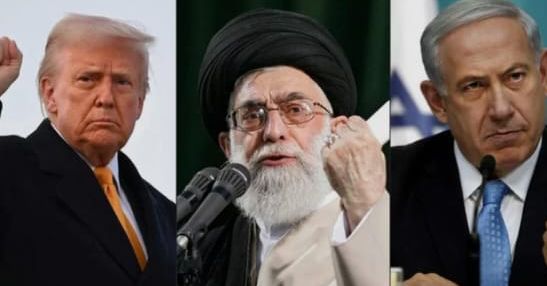
” If the U.S assassinates Ali Khamenei, we have capable hands that can replace him”
-Iran’s Araghchi
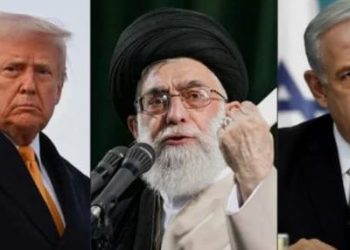
Iranian Foreign Minister Abbas Araghchi has affirmed the Islamic Republic of Iran’s robust institutional framework, asserting its capacity to maintain uninterrupted governance even in the hypothetical event of the Supreme Leader Ayatollah Ali Khamenei’s assassination.
 In an exclusive interview with the press, Araghchi expressed complete confidence in this regard, emphasizing the presence of a well-established succession mechanism inherent within the system.
Araghchi addressed recent discussions in certain segments of the U.S. media concerning potential targeted actions against Khamenei, underscoring that the Iranian political order is not reliant on any single individual. He elaborated, “This is a system. It is a well-established mechanism that exists within the system itself, so nothing would collapse.
Everyone would be replaced through established procedures. Our system does not depend on individuals. It is supported by the people.” He further noted the regime’s demonstrated resilience during periods of conflict, maintaining operational continuity without structural breakdown.
These remarks were made amidst escalating geopolitical tensions, emanating from U.S.-Iran diplomatic engagements in Geneva regarding the nuclear program and increased speculation about potential military scenarios.
They reflect Tehran’s strategic efforts to project institutional strength and deter external threats, while reaffirming the constitutional processes—such as the role of the Assembly of Experts in electing a successor, as observed following the passing of Ayatollah Khomeini—that underpin leadership transitions.
By characterizing the Islamic Republic’s governance as inherently resilient and populace-supported, Araghchi’s statements aim to both reassure domestic constituencies and signal to international observers that any attempts to destabilize Iran through the removal of key figures would be ineffective. The statement underscores the regime’s confidence in its long-standing mechanisms for continuity amidst persistent regional and global pressures.
Credit – Phoenix