



Inter-Agency Coordination, Accountability Benchmarks Key in Proper Harmonization of Single Window, Other Digital Systems – Aniezechukwu
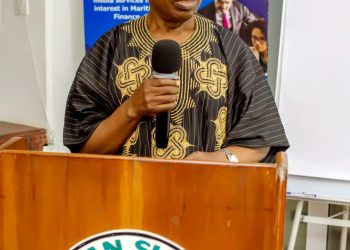
Recently, the Editor-in- Chief of The Prestige Blended Magazine Online and Print, McAnthony Udochukwu Onuoha, engaged the Director General, Sea Empowerment & Research Center, Francis Uchechukwu Aniezechukwu, in an exclusive interview in his Lagos office. The Clergy man, Author, Social Activist and Customs Broker, in this special interview session, speaks on ports modernization programme, the advancement of single window, the blue economy initiative, and challenges facing some of the technological innovations, as well as possible solutions. Enjoy the excerpt!
QUST: Could you identify some of the challenges freight forwarders are facing presently?
ANS: I have said this severally and i will continue to emphasis, that freight forwarders in Nigeria are contending with both structural and operational challenges that undermine efficiency, professionalism, and competitiveness within the maritime sector. Chief among these challenges is the absence of a central regulatory body specifically mandated to govern and standardize freight forwarding operations across the country.
1. Absence of a Standard and Functioning Regulatory Agency:
The lack of a centralized regulatory authority has created a vacuum in the coordination and professional regulation of freight forwarding practice. Without such a body, there are no uniform operational standards, ethical codes, or certification frameworks. This has led to inconsistency in service delivery, infiltration of unqualified operators, and erosion of professional integrity within the industry.
2. Lack of Uniform Standards and Professional Guidelines:
The absence of standardized training and operational benchmarks has resulted in diverse, often conflicting practices among freight forwarders, affecting the quality and reliability of services rendered to importers and exporters.
3. Regulatory Overlaps and Compliance Burdens:
In the current environment, freight forwarders navigate multiple agencies — Customs, SON, NAFDAC, NESREA, and others — each with independent requirements. Although this is one of the ills that the Single Window Project suggests to cure, the lack of a central coordinating agency leads to confusion, delays, and increased compliance costs.
4. Unregulated Competition and Market Distortion:
The entry of unqualified operators has heightened unhealthy competition, forcing legitimate practitioners to lower fees while compromising standards and compliance. This undermines professionalism and discourages capacity development.
5. . Weak Dispute Resolution Mechanism:
With no specialized regulatory framework, freight forwarders and their clients have limited avenues for dispute mediation, often relying on informal channels or litigation that consume time and resources.
In summary, while operational inefficiencies and policy inconsistencies remain serious concerns, the fundamental challenge lies in the absence of a dedicated national regulatory agency for freight forwarders. Establishing such a body would promote professionalism, enforce ethical standards, harmonize operations, and strengthen the role of freight forwarders as key partners in trade facilitation and national revenue generation.
QUST: Can you briefly appraise the performance of the immediate past CAC of PTML Command?
ANS: The performance of the immediate past Customs Area Controller (CAC) of PTML Command can be described as above average. In line with the understanding that governance is a continuum, it is important to acknowledge that his administration laid a solid foundation for continuity, particularly through the “B. Odogwu Modernisation Project.” His tenure was marked by visible efforts to enhance operational efficiency, infrastructural improvement, While there may still be areas requiring consolidation and refinement, his contributions provided a progressive framework upon which the current leadership can build to further strengthen trade facilitation and revenue generation at the Command.
QUST: Even though CAC’s are not answerable to freight forwarders, they work to meet their revenue targets which is their major focus. What are your expectations from the present CAC PTML Command?
ANS: While it is correct that Customs Area Controllers (CACs) are not answerable to freight forwarders, but their accountability lies within the institutional structure of the Nigeria Customs Service (NCS) under the authority of the Comptroller-General of Customs (CGC) and the Federal Ministry of Finance. However, this administrative independence does not absolve them from obligations imposed by national legislation and international trade facilitation frameworks of which Nigeria is a contracting party.
Under the Nigeria Customs Service Act, 2023, the CAC’s duties are guided by statutory provisions aimed at balancing revenue generation, trade facilitation, and national integration.
Section 223(1) further emphasizes the Service’s obligation to “simplify and harmonize customs procedures consistent with international best practices.”
These provisions collectively mean that while CACs focus on revenue targets, they must do so within the legal framework that prioritizes efficiency, transparency, and predictability in trade operations.
On the international plane, Nigeria, as a signatory to the World Trade Organization’s Trade Facilitation Agreement (WTO TFA) and the Revised Kyoto Convention (RKC), is bound to ensure that customs administration aligns with global principles of transparency, predictability, and stakeholder collaboration.
Specifically:
Chapter 3 of the Revised Kyoto Convention stresses the “use of information technology, simplified procedures, and partnership with the private sector” to ensure smooth and fair clearance processes.
Therefore, while CACs are not accountable to freight forwarders, in confidence, l strongly believe that Compt. Joe Anani, the present CAC of PTML Command, based on his operational expertise and administrative competence, will reflect compliance with these binding legal and international standards.
His performance, previously and particularly at a major port such as PTML Command, will once again strengthen trade facilitation measures under both the Customs Act and the WTO TFA — reducing delays, ensuring transparent valuation, and embracing automation.
He is also expected to engage stakeholders constructively, addressing legitimate trade concerns through dialogue and compliance with partnership frameworks.
Additionally, he is expected to sustain modernization initiatives, such as the B. Odogwu-led infrastructural and ICT-based reforms, ensuring continuity in customs modernization
In conclusion, CACs operate within a dual framework of domestic law and international obligation. They must therefore discharge their duties in conformity with Sections 4 and 223 of the Nigeria Customs Service Act, 2023, and the provisions of the WTO TFA and Revised Kyoto Convention
Their legitimacy and performance are measured not merely by revenue figures but by how effectively they balance enforcement with facilitation, reflecting Nigeria’s commitment to transparent, efficient, and globally compliant trade administration.
QUST: Are there some recent administrative or operational changes by Grimaldi Shipping that you would want to be reviewed?
ANS: Yes, while we commend Grimaldi Shipping for notable strides—particularly the launch of the direct China–Nigeria shipping service and ongoing fleet modernization aimed at improved efficiency and environmental compliance—there remain operational issues at the PTML Command that deserve review.
Specifically, clearing agents have expressed concern over restricted access cards, and instances where they are charged demurrage or storage fees during periods when Grimaldi’s delivery systems are non-functional. It is important that such charges be reviewed to ensure fairness and accountability.
That said, commendation must go to the National President of ANLCA and the PTML Chapter Chairman for their consistent engagement and interventions toward creating a more conducive working environment. Their efforts in dialogue with Grimaldi management have already led to improved access arrangements and a clearer process for addressing operational downtimes.
Overall, while Grimaldi’s administrative innovations are welcome, periodic review and stronger stakeholder collaboration are essential to ensure that efficiency gains translate to real trade facilitation benefits at the port.
QUST: What measures would you suggest be put in place to revitalize the Port industry?
ANS: First, I must commend the Federal Government of Nigeria for its sustained interventions aimed at modernizing the nation’s ports — particularly through the deployment of technological equipment such as modern scanning machines, the ongoing port modernization programme, the blue economy initiative, and the advancement of the National Single Window project. These steps align with global best practices, as ports worldwide now run on digital efficiency, automation, and seamless data exchange.
However, while these policies are well-intentioned and technically sound, implementation remains a major gap. Evidence from the field, including the B’ Odogwu modernization effort, suggests that many port operators, stakeholders and officers are not yet fully adept at using the new technologies provided. Therefore, the key measure going forward should be comprehensive capacity building — regular training, retraining, and digital literacy programs for customs officers, terminal operators, other agencies and freight forwarders.
Additionally, there should be inter-agency coordination and accountability benchmarks to ensure the Single Window and other digital systems are properly harmonized and not operated in silos. Finally, Government should encourage private sector participation in technological upgrades and ensure continuous feedback mechanisms from port users, so that modernization efforts translate into faster clearance times, reduced cost of doing business, and true trade facilitation.
In summary, technology has been provided; what remains is human capacity, inter-agency synergy, and accountability to make Nigeria’s port system globally competitive.